


As mentioned in the previous piece:
Rimbaud said:
“I is another.”
I would say, for my part, that “I” is plural.
And maybe identity isn’t about choosing between all these versions—but welcoming them, each as a simultaneous truth.
And that’s where Jim Rohn’s words take on a new meaning:
“If you want things to change, you have to change.”
He was talking about deliberate, conscious change—almost strategic. But in my case, change has often happened to me. It came uninvited, unplanned.
I changed when I wanted to be liked, when I wanted to succeed, when I wanted to live up to my family’s expectations.
At every stage, I unconsciously adjusted something within myself—a way of being, a way of thinking, a posture—to become the person the situation seemed to require.
It wasn’t a plan. It was a reaction. And maybe that’s the most unsettling part: we often become who we need to be without even realizing it.
It’s a constant process—subtle, but deeply active.
And yet, becoming aware of that mechanism can change everything. Not to control it entirely, but at least to guide the next version of ourselves with more clarity.
And maybe that’s the paradox of how we evolve: it’s intimate, silent, sometimes involuntary, but always visible—to others, in their own way.
The Many Reflections We Leave Behind
People often have different opinions about us. The same person, but seen in many different, sometimes even contradictory ways.
It usually depends on the context, the environment, the moment.
Personally, I never reject what people say about me. If someone says I’m arrogant, I say they’re probably right. Whether they call me respectful or rude, patient or impulsive, intelligent or naïve, generous or distant—it doesn’t matter.
I accept all of these perceptions as truths, even if deep down, I don’t always feel like the person they’re describing.
Why? Because I figure maybe they met me at a time when I really was just as they saw me.
Even if it was just a fleeting moment, just one fragment of me—it was still real.
That’s why I always try to meet people without preconceived ideas. What interests me is the version of them I perceive myself—through their actions, their silences, their gaze.
It doesn’t matter what others have said about them. And I like to believe I’m offered the same chance: to be seen for who I am here and now, not for who I was yesterday.
Choosing Who We Become
So if the “I” is plural, it’s up to us to decide which version to nourish.
There are days when I still feel like a caterpillar—hungry to learn, clumsy, mid-transformation.
Other times, I feel like a seed growing blindly in soil I don’t fully understand.
And sometimes, I think I might be a butterfly—for a moment—until a gust of wind reminds me just how fragile flight can be.
But today, I know this much:
these versions of me are not mistakes.
They are states.
Fragments of a single path.
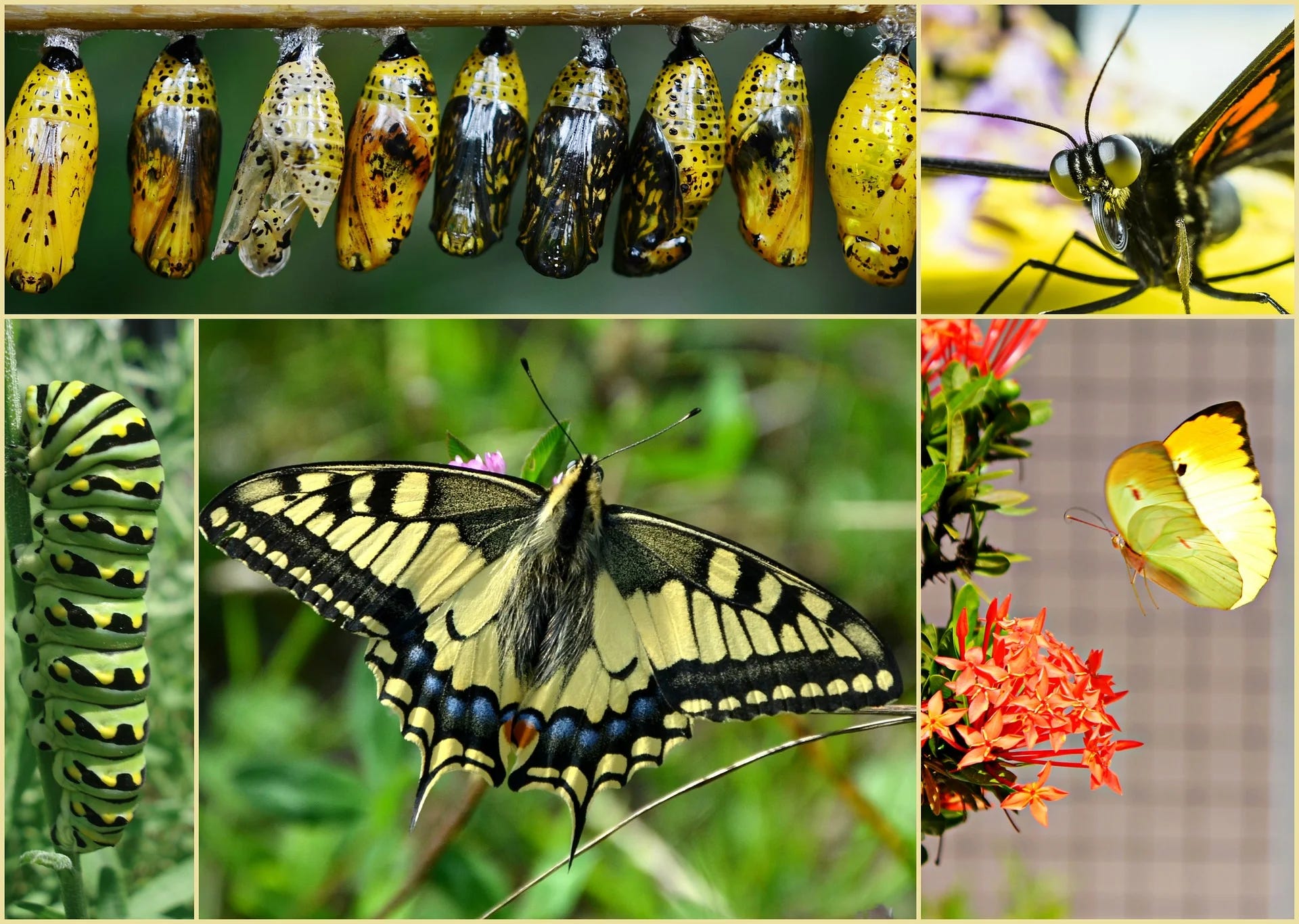
And it’s up to me—up to all of us—to choose which ones to nurture and which to let fade. Not to erase the past, but to refine what we’re becoming.
Because identity isn’t a fixed answer.
It’s a living system we build inside ourselves, day by day.
It’s made of values, memories, emotions, instincts, and hesitations.
We feed that system—often without realizing it—and it’s what ends up guiding us: in our decisions, our behaviors, our dreams.
Understanding this might already be the first step in steering the path more consciously.
Toward what? Toward whom? Toward which version of ourselves?
That might be tomorrow’s question.
But today, here and now—who am I, with what I know, what I feel, and what I choose to become?
Thank you for journeying with me through this first part of Understanding Identity.
I don’t know where you are on your own path—but if something in this reflection stirred something in you, here are a few questions you might carry with you:
Who have you become in response to others—without realizing it?
Which version of yourself have others seen that felt unfamiliar to you—but might still hold some truth?
Which part of you, today, feels most alive—and is it a version you’re choosing to nurture?
No pressure to answer.
Just an invitation to pause, and take a moment to notice where you are in your becoming.
See you next week for the first shape of The Traps of Identity.
Warmly,
Odel Asseille
The Mirror Room – First Edition