


You know—
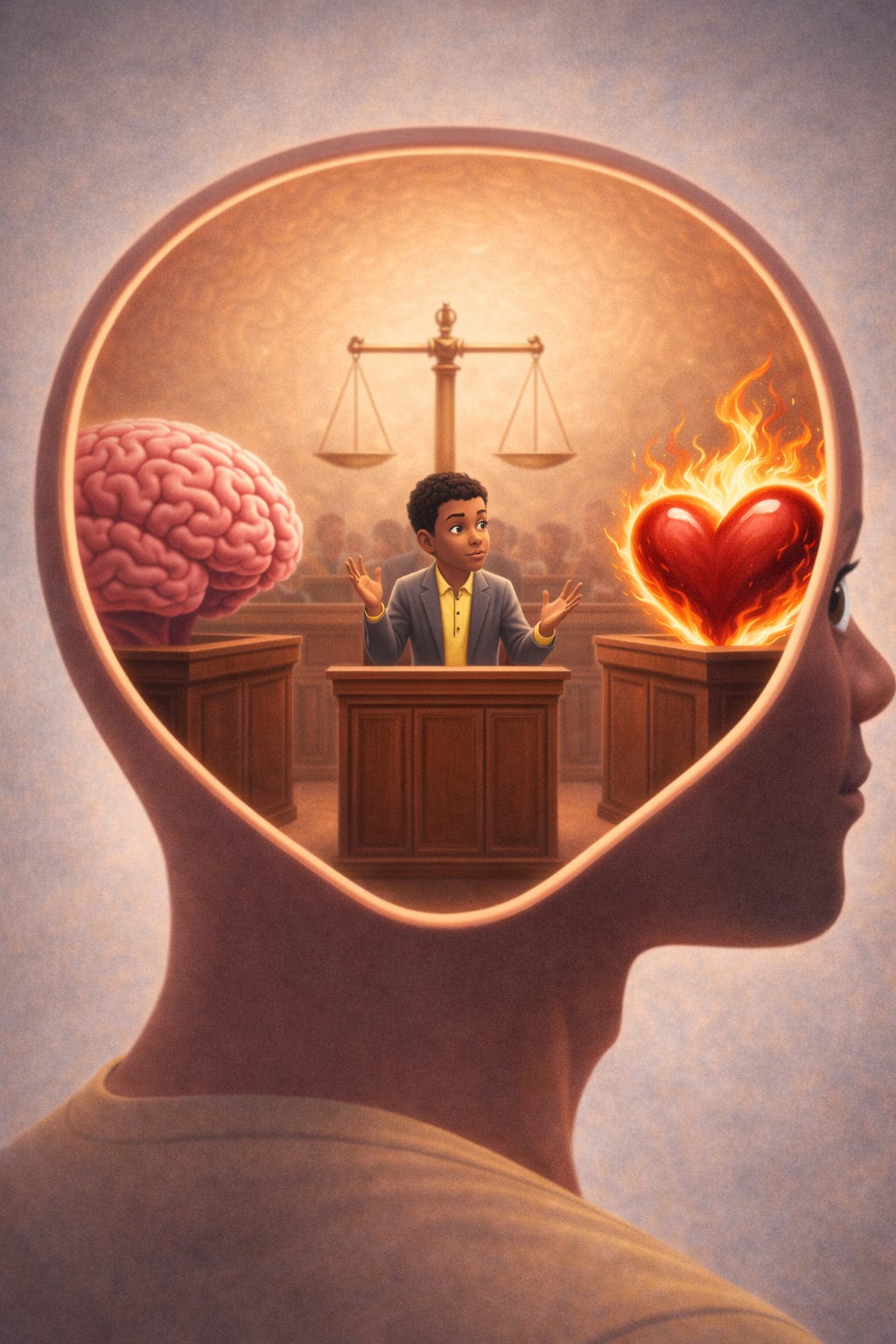
your departure ignited
a civil war inside me,
between my mind and my heart,
between my principles
and my faith.
My heart—
loyal servant of belief—
still pleads for your presence.
It argues your case with fierce devotion,
waiting desperately
for a sign from you,
as if love were owed
a reward
for its relentless persistence.
I don’t know where it finds the strength.
How does it keep fighting?
How does it still stand
at the gates of a closed door?
I can only admire
its stubborn devotion—
its loyalty,
its vanity.
My mind—
guardian of my laws—
holds nothing against you.
Your leaving has been accepted,
even forgiven.
But your return is not desired.
Not from cruelty.
From clarity.
Each time my heart discovers an opening,
my mind discards it
like worn cloth.
Each time my heart invents a reason,
my mind answers with conviction.
Can she be trusted again?
Are we foolish enough
to try?
What should I do?
What would you choose
if you were me?
Surrender to my foolish heart—
or to my reasoning mind?
Perhaps the truest choice
is neither.
Perhaps it is simply
to be myself.
So I go on living,
consoling my tired heart
with a quiet tap
from my values—
holding on to the hope
that other colors will return,
that another promise
will one day rise
from different hands.
If this resonated, take your place in the Room.
Enter as an Observer.
Remain as a Mirror Keeper.
With clarity,
The Mirror Room
Odel A.
It’s a constitutional crisis handled with dignity.
What moves me most is that neither side is villainized. The heart is not mocked for its loyalty. The mind is not shamed for its boundaries. You allow both to speak in their native language: devotion and law. That’s rare. Most people crown one and exile the other.
“Not from cruelty. From clarity.”
That line lands like a verdict delivered without malice. It’s the moment the poem matures.
And the image of the heart standing at the gates of a closed door? That’s devastating. But what I admire is that you don’t let it break in. You let it ache. There’s strength in that restraint.
The closing turn is especially wise. You don’t frame the future as a replacement for her. You frame it as a return of color. That subtle shift matters. It suggests you’re not waiting for the same story to resume, you’re leaving space for a different palette altogether.
If I were you? I wouldn’t surrender to either side. I would do exactly what this poem does: let them both speak, then choose from selfhood rather than fear.
This feels less like heartbreak and more like integration. And integration is never dramatic, it’s deliberate.
Beautifully steady work.
If a civil war does not lead to ruin, it becomes history.