


Welcome back to this ongoing reflection on identity.
In the previous article, we explored what the life cycle of butterflies can teach us about who we are — and how identity, like theirs, is a journey of constant change.
Now, in Part 2 of Understanding Identity, we continue that exploration.
Because identity isn’t fixed — it evolves. It moves, transforms, adapts.
And the more we pay attention to that movement, the more we understand ourselves.
Becoming Takes Time
The birth of the butterfly is only one image among many.
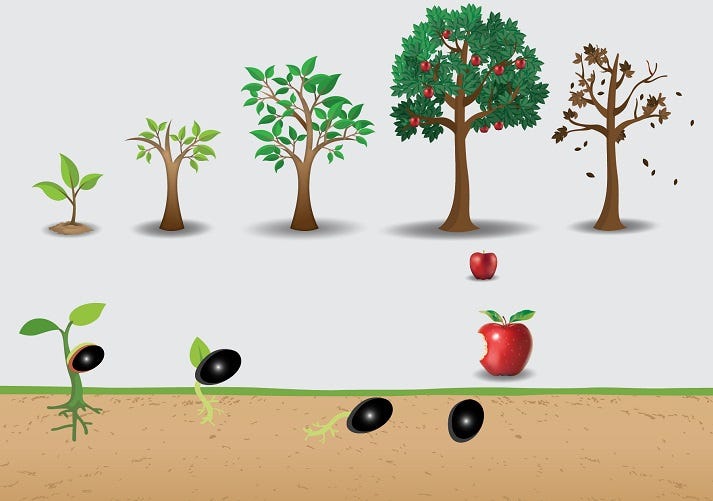
The tree, too, was not always a tree. It was first a seed—tiny, forgotten in the soil—then a fragile shoot a gust of wind could easily have snapped. And only through seasons, through slow growth, through adapting to the wind and rain, does it become what we later call an oak or a fig tree.
In the same way, it would be naïve to believe that our identity is something fixed or given from the beginning. What we call “the self” is not a stable essence, but a continuous construction—a process, a journey made of ruptures, learning, wounds at times, and often, rebirths.
Within each of us exist past versions—sometimes embarrassing, sometimes forgotten—without which the present would lose its meaning. And what we experience today, even in silence, even in the shadows, is already shaping the person we will become tomorrow.
This is the perspective shared by Carl Gustav Jung:
“We are not born as ourselves—we become ourselves.”
So maybe we need to stop for a moment, really pause, and dare to ask the question that seems so simple we tend to avoid it:
What is identity? Who am I, deep down?
Is the person I am today the “butterfly” version of myself? Have I already become what I was meant to be—or am I still somewhere between the caterpillar and the flight, changing without even realizing it?
But above all, does the butterfly know it’s a butterfly?
Does the caterpillar have any idea that one day it will become something else?
Would it already wish to fly before it even has wings?
Or does it live its life as a caterpillar fully—feeding, moving inch by inch, without rushing toward a future it doesn’t yet know, but that will come in its own time?
And the seed—does it dream of becoming a tree? Does it project itself into a majestic future filled with branches and birds, or does it simply grow, absorb light, move through the seasons as they come—knowing, perhaps without knowing, that each day of patience brings it one step closer to what it is meant to become?
The Many Faces of Who We Are
I have only one certainty: the person I am today is no longer the child who used to chase butterflies. The tumults of life, the gentle or violent jolts of everyday experience, have forced me to grow—sometimes even to transform—to adapt, to learn, to move forward differently than I once imagined.
There were moments when change wasn’t a choice but a necessity, almost a matter of inner survival.
But does that mean every trace of that child is gone? No, I don’t believe so.
I can even say with confidence that something remains within me: values, impulses, perhaps a certain lucid naïveté that hasn’t completely left the ship.
Of course, they’re no longer untouched. They’ve been shaken, tested, refined over the years—by mistakes, by grief, by hope. Some have evolved, others have stayed nearly the same—like those objects we keep without thinking, only to find them one day at the back of a drawer, quiet witnesses to who we once were, silently always there.
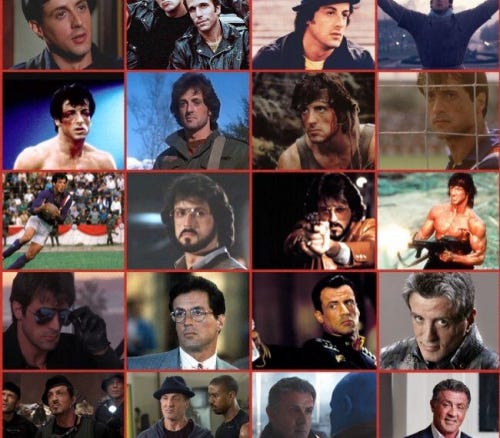
It’s also obvious that we are not always the same person.
At every stage of life, something in us shifts—sometimes imperceptibly, sometimes abruptly.
I don’t know about you, but I can say it without hesitation: I am far from being the same as I once was.
Even in high school, I was no longer that little boy who used to chase butterflies.
And the day I fell in love for the first time, I changed. My behavior, my gestures, my way of speaking—everything adjusted itself in an effort to charm that girl.
And when that love ended, I changed again. I was no longer that naïve lover; I carried within me the imprint of a heart that had learned to be cautious. And since then, the transformations have never stopped.
We shift, we grow, we adapt—a little more each day—without even realizing it. It’s like growing up: no one sees it happening. It’s only when we look at an old photo or revisit an old memory that we realize just how much we’ve changed.
And yet, in our day-to-day lives, we keep believing we’re still the same as we were yesterday, the same as we were a year ago.
“I” Is Plural

In our cultures, too, there are sometimes communal celebrations that bring us together.
Take Thanksgiving, for instance. Around that time, nearly every household prepares a turkey. It’s the dish of the season—so common it’s almost unremarkable.
But assuming all turkeys are the same would be a rookie mistake. Same basic ingredient, sure—but different recipes, different spices, unique presentations. Every household, every tradition, every hand leaves its mark on the dish.
Identity is exactly the same.
Each “me” is a little different—depending on the life stage, the influences, the wounds, the desires, the expectations.
The child who ran after butterflies. The cocky high schooler convinced he knew it all. The love-struck teen. The rebellious son. The adult riddled with doubt. The cautious man when it comes to money. The one who stopped believing in love, and the one who found it again—all of those faces were me.
They’ve always been me. Same base, same origin. But different shapes, different flavors.
Rimbaud said:
“I is another.”
I would say, for my part, that “I” is plural.
And maybe identity isn’t about choosing between all these versions—but welcoming them, each as a simultaneous truth.
Core message: Identity is not a fixed truth — it’s a process of becoming, shaped by time, experience, and every version of ourselves we’ve ever been.Thank you for following this next step in the journey of understanding identity.
I don’t know where you are on your own path—but if this reflection touched something in you, here are a few questions you might carry with you:
• Which version of yourself have you left behind—but still quietly carry within you?
• Are you rushing toward a future you haven’t yet grown wings for?
• Can you welcome all the parts of who you’ve been, without needing to choose just one?
No pressure to answer.
Just an invitation to pause—like the seed, like the caterpillar—and take a moment to notice where you are in your becoming.
See you next week for the final shape of Understanding Identity.
Warmly,
Odel Asseille
The Mirror Room – First Edition
Perhaps I would just add one more reflection. The child we once were makes us who we are now, maybe it’s that very lack of knowledge that the caterpillar will become a butterfly, but rather an instinct that yearns for understanding, without necessarily needing to ever find out.
Great exploration of identity and self! Enjoyed this.