
Disclaimer
These reflections are intended for self-observation and personal exploration. They are not a substitute for professional mental health support. If a reflection brings up overwhelming emotions, consider taking a pause and seeking support from a qualified professional.
The Mirror
As children, we understand life with very limited tools. We see what happened. We feel the pain.
But we often cannot see everything that exists around the event.
We do not see our parents’ fears. We do not see the beliefs they inherited. We do not see the responsibilities they carried.
We do not see the time and environment that shaped them.
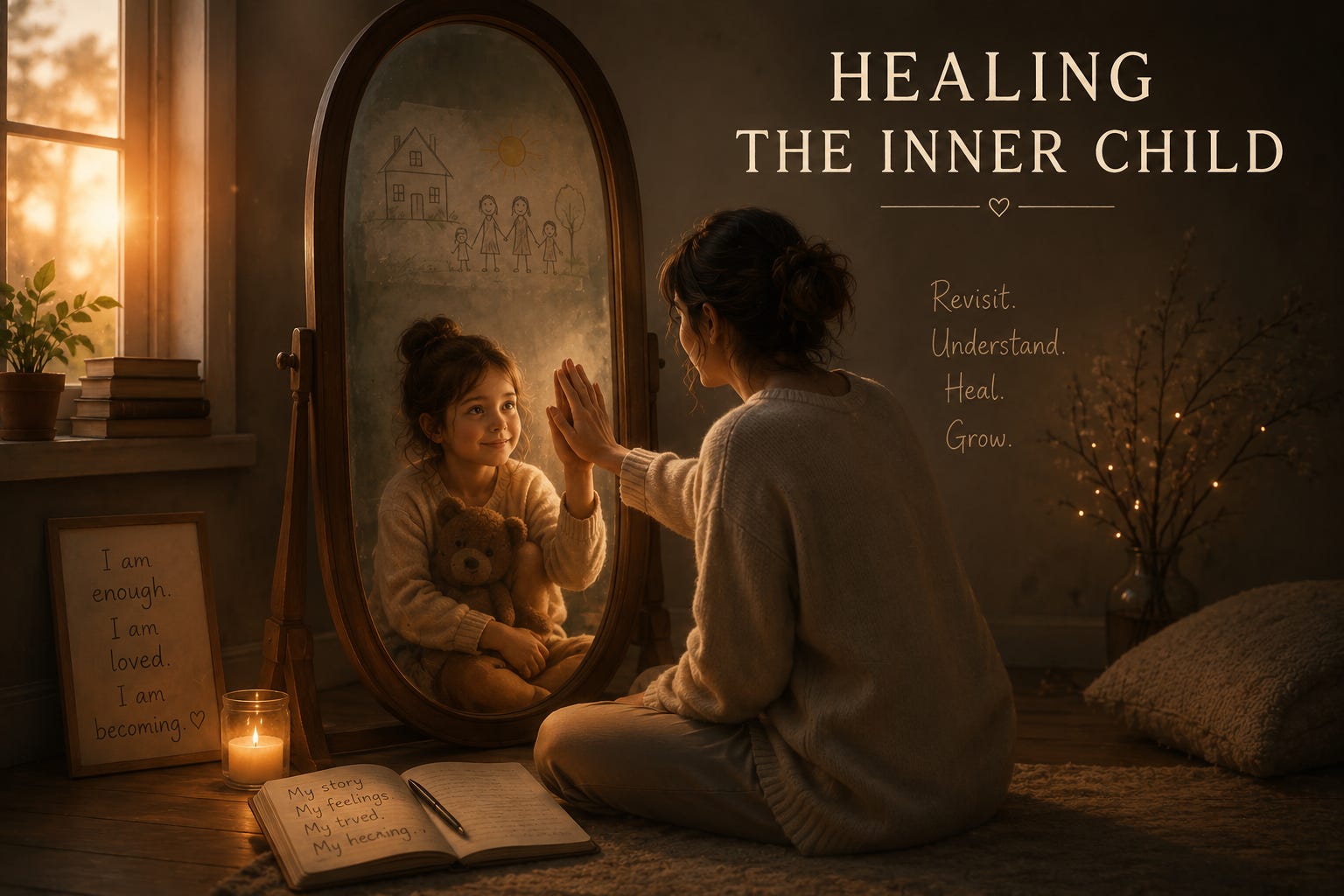
I have found that some wounds became easier to carry once I began asking myself a different question:
What could the child in me not see?
The answer did not erase the pain. But it changed my understanding of it.
This week’s practice is an invitation to look beyond the wound without denying it.
This Week’s Learning Focus
By the end of this practice, you will be able to:
distinguish the event from the meaning you attached to it as a child;
recognize pieces of the context your younger self could not yet understand;
hold both pain and compassion without feeling that one invalidates the other.
The goal is not to change the past.
The goal is to change the way you relate to it today.
Before You Begin
As you move through this practice, you may notice moments of resistance.
You may think:
“If I try to understand them, am I making excuses for what happened?”
Understanding and excusing are not the same thing.
The purpose of this practice is not to decide whether someone should be forgiven.
It is simply to see the event more fully than the child was able to.
If a question feels difficult, don’t force an answer.
Curiosity is more valuable than certainty.