


When You’re Not the One They See
I remember, when I lived in Colombia—I spent more than seven years there—a scene I experienced far too often. A scene whose absurdity was matched only by the silent violence it carried. At the time, I was a student, and I also taught languages. My classes usually ended around 10 p.m. My apartment wasn’t far—about a twenty-minute walk from the university, a bit less if I walked quickly.
So it would happen that, on my way home, I’d see someone ahead of me start to run. Not walk briskly—run. Or more precisely: flee. Man or woman, it didn’t matter. Sometimes the person would pretend to be crossing a busy highway, even though there were pedestrian bridges just a few steps away—built, in fact, to avoid such reckless decisions. Other times, they’d pretend to rush into a building, as if returning home—though often these were clearly office buildings, closed for the night, places they obviously had no reason to be entering.
Why the sudden panic? Why the urge to escape? Did I walk suspiciously? Was I wearing something threatening? None of that. I was simply a Black man walking alone at night.
The first time, I felt frustrated—disoriented. Then I understood. And what struck me most was that even Black Colombians, born and raised there, were subjected to the same prejudices.
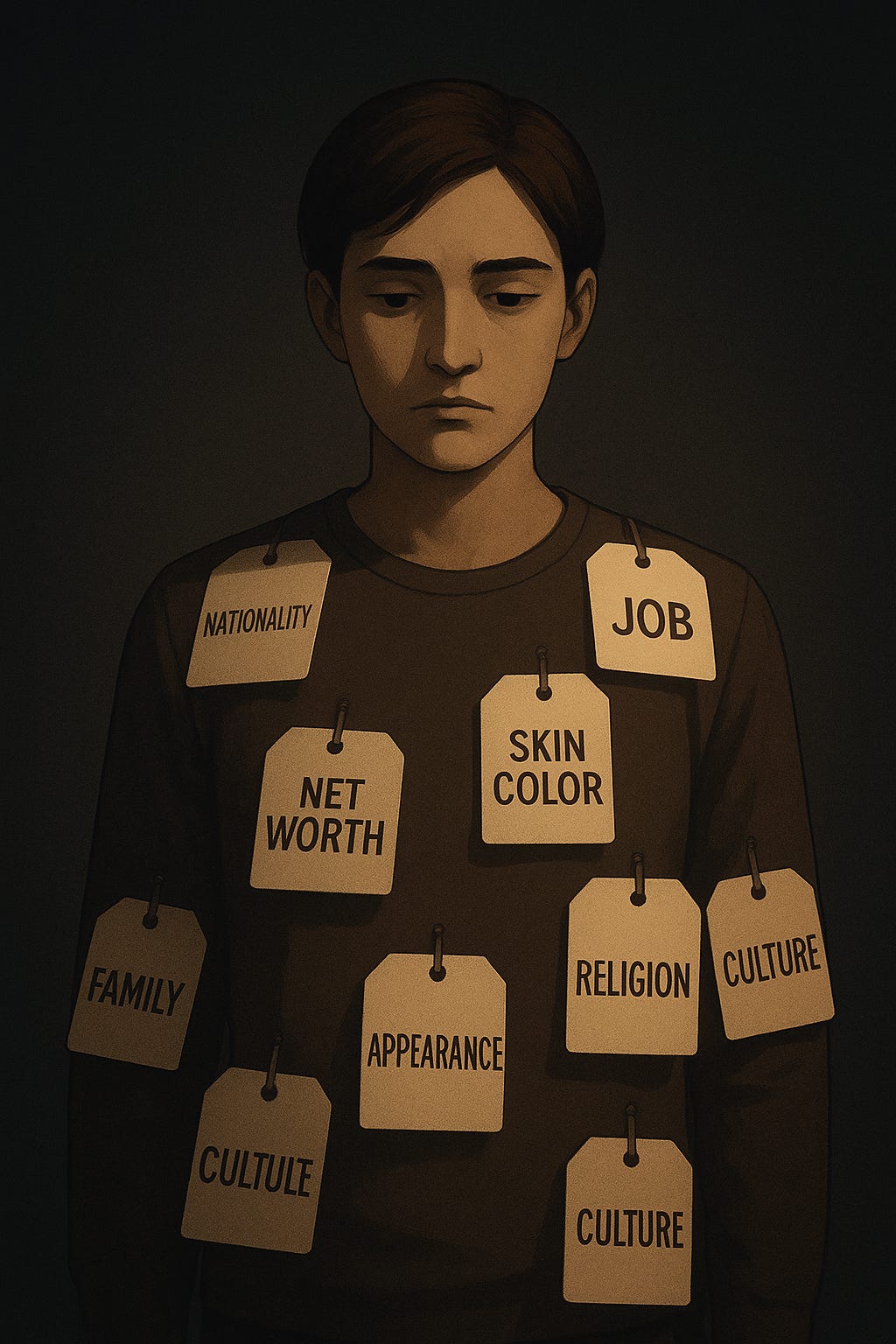
I’ve also had people stop speaking to me or avoid me altogether, simply because of my nationality. It still happens today. Not because I acted wrongly or spoke inappropriately, but because I carry, whether I like it or not, certain characteristics of my identity—skin color, origin, language, accent—that trigger automatic judgments.
Judgments that precede me, that confine me, and that I never chose.
We Are All Misjudged, Sometimes
Yes, I am a man of color. But this text is not a cry of complaint, nor a catalog of pain linked to history or the condition of my people. What I’m trying to express goes beyond color. Because whether we’re Black or white, rich or poor, beautiful or ordinary—we all, at some point, suffer the weight of other people’s prejudices about aspects of our lives we never chose. Sometimes all it takes is one visible trait, one detail, for us to be boxed into an image, a story that isn’t ours.
How many beautiful women suffer in love, constantly suspected of arrogance or frivolity, simply because their beauty comes before their intentions?
How many times does a handsome man, claiming to be single, face mocking disbelief from those who refuse to believe him?
How many wealthy people, who built their fortunes through sweat and sacrifice, are slandered as if being both prosperous and honest were mutually exclusive?
And how many poor people are accused, despised, silently condemned—simply because their social condition evokes more suspicion than compassion?
In my country, there’s a common saying: all wrongdoing wears the face of the poor. And as sad as that is, the phrase contains a grain of truth. Because identity, in its social dimension, functions like a uniform you can’t take off—it draws expectations, judgments, suspicion, and sometimes even danger.
Just like an athlete can bask in their team’s victories even without having performed well individually, they also suffer the losses and criticism—even if they gave their all.
Sometimes, an average player finds themselves on an exceptional team—not because they’re mediocre, but simply because the team’s level, at that moment, exceeds what they can contribute. And the truth is, many who feel entitled to judge them wouldn’t have made it a quarter of the way that player had to travel to get there.
Conversely, we sometimes see a brilliant, talented, committed player lost in a dull, disorganized team too weak to showcase their abilities.
The Real Trap of Identity
I remember a stay in Mexico, where a friend of mine was threatened in the street. It wasn’t because of the color of his skin, nor because of anything he said. It was simply because he was wearing a small American flag sewn onto his sleeve. And the most ironic part of the story is that this friend, just like me... wasn’t even American.
That, I believe, is where one of the greatest traps of identity lies: being judged—sometimes even condemned—for the characteristics of a group you’re associated with, whether willingly or not. For your origin, your accent, your culture, your tastes, your religion... and for all the suspicions or projections these traits might trigger in someone else’s mind. It’s not the individual being seen, but the team they seem to represent.
And that’s often where true injustice begins.
***
Core message:
We are often judged not for who we are, but for the group others assume we represent—and that misrecognition can shape how we are treated, seen, or even feared, before we’ve had a chance to show anything of ourselves
***
If something here resonated, here are a few questions to carry with you:
Have you ever felt misjudged because of something you didn’t choose—like your appearance, background, accent, or culture? How did that moment shape you?
What group or “team” do others associate you with—fairly or unfairly—and how does that influence how you're treated or perceived?
When meeting someone new, what judgments do you tend to make automatically? Can you slow down and see the person before the “label”?
If you feel like sharing, leave a comment or send me a DM. I’ll be glad to listen and reply.
See you next week for the next shape of this journey.
Warmly,
The Mirror Room – First Edition