


I wrote this series of letters to my family in December 2025, after finishing the audiobook Stillness Is the Key by Ryan Holiday.
In his search for stillness and a fulfilled life, he suggests that healing the inner child is an essential step. That idea seemed important to me. Childhood wounds, when left unaddressed, often remain open, and at any moment they can resurface and affect our lives again.
Listening to that book forced me to confront something I had avoided for a long time. I could no longer turn a blind eye to my childhood wounds.
Very often, when people talk about childhood trauma, adults are painted as villains. Parents are judged, sometimes even condemned. To be fair, some parents truly are awful, and many people have endured unimaginable suffering during their childhood.
That tension was precisely why I avoided exploring this part of my life.
I did not see my parents fitting the descriptions of the “bad parents” I often heard people talk about. They never physically abused me, and growing up, I did not see them as psychologically abusive either—or at least, not entirely.
There were things they said that some people would consider emotionally harmful by today’s standards. Yet in the environment where I grew up, many of those things were considered normal.
For a long time, I mistakenly believed that having childhood trauma automatically meant having bad parents.
After much reflection, I no longer think that is true.
The truth is that love does not eliminate the possibility of being hurt. In fact, the people who love us most are often the ones who hurt us the most—while sincerely believing they are acting in our best interest, trying to protect us.
I believe many childhood wounds are born from misunderstanding: an immature mind forced to face a reality too complex for it to fully understand.
This does not remove responsibility from the adults involved, whether their actions were intentional or not.
That said, these reflections are not about childhood wounds themselves. There are already countless discussions about trauma.
Instead, this series seeks to understand the mechanisms behind some of our wounds and perhaps offer a measure of comfort to the inner child.
These reflections propose something simple:
To look at childhood wounds through the eyes of the adult.
They are not meant to defend or justify painful actions committed by our parents. Nor are they meant to minimize the depth of our wounds or blame those responsible.
No matter their size or severity, childhood traumas are real. Their impact is measured by the mind that experiences them, and as children, we are often more fragile and sensitive than we realize.
When I wrote these letters—the complaints of the child—I was not trying to justify or condemn my parents.
In truth, I do not expect them to fully understand these wounds. If I were to share these words with them, they might create even more distance between us.
Very often, when we revisit old wounds, our primary goal is to make those who hurt us understand our pain. Yet that is sometimes incredibly difficult, if not impossible.
Some people may never understand the wounds they caused.
Fortunately, healing does not necessarily depend on their understanding.
For me, these letters were a way of giving the child within me space to express wounds he had carried for far too long. By revisiting those pains with the eyes of an adult, I could begin helping him understand the reality behind them.
It is a bit like going to the gym for the first time.
You do not always know how the machines work. I remember using some of them incorrectly and exhausting myself unnecessarily. Once I learned how they worked—either through observation or because someone explained them to me—the experience became much easier.
The machine was not bad.
I was not stupid.
I simply did not understand how it worked.
Sometimes suffering is intensified by a misunderstanding of reality.
The child within us is not at fault.
They simply did not yet possess the tools needed to face certain situations.
The goal is to see more clearly and understand reality more fully. Understanding is not healing in itself, but it can make the healing process easier.
A child’s mind cannot fully grasp the complexity of the adult world. At that stage, things are often seen in black and white.
When a child hears that their mother once attempted an abortion, or that a parent did not plan their pregnancy, the child’s mind may immediately form a conclusion:
I was not wanted.
I am not loved.
Those thoughts can deeply influence a child’s development. They can create a sense of disconnection—from oneself and from the world around them.
That was certainly the case for me.
Little by little, the child learns to withdraw, to make themselves smaller, to avoid becoming a burden to others.
The wound is real.
And the pain runs deep.
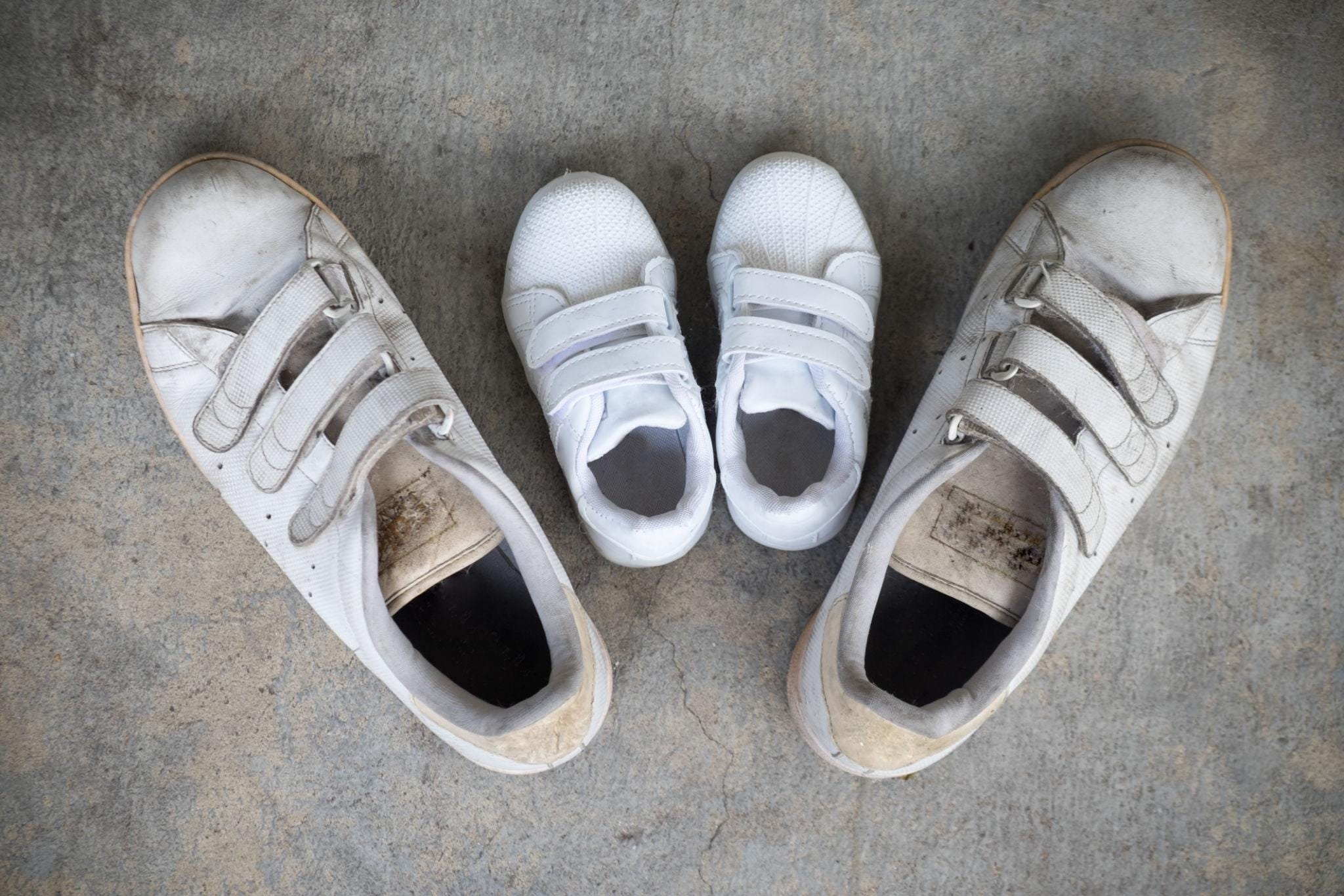
Read this week’s poem:
Dear Mother, There Is Something I Never Said

This poem carries a heavier weight than most of my writing. It reflects on a wound that many of us carry in different forms, and one that shaped part of my own life.
If this reflection resonated with you, you may have noticed that the event itself is not always what stays with us.
Often, it is the conclusion we carried away from it.
A child experiences something painful. The mind creates an explanation. That explanation becomes a belief. And long after the event has passed, the belief may continue shaping the way we see ourselves, others, and the world around us.
This week’s Clarity Practice explores that process more deeply.
Through guided questions, reflection exercises, a self-audit, and a simple weekly experiment, you’ll have the opportunity to revisit a childhood conclusion that may still be influencing your life today.
Not to judge it. Not to excuse it. Not even to change it immediately.
Simply to understand it more clearly.
The Clarity Practice is available to paid subscribers.
If this post brought you something meaningful, feel free to leave a like, share your thoughts, or pass it along to someone who may need it.
If you would like to support this work, you can leave a tip or become a paid subscriber.
Paid members receive additional resources created to help them better understand themselves, question their assumptions, and move through life with greater clarity and intention.
With clarity,
The Mirror Room
Odel A.
You are able to uncover the complexity behind these emotions so well, my son. It’s not a simple blame game. It’s not a black and white story.
That gym-machine comparison..? Made me go quiet in the most annoying oh babe, yes kinda way... Little-you wasn’t broken or dramatic, he was just trying to survive adult stuff with no manual, and I really liked how you didn’t turn anyone into a villain just to say the hurt was real. The messy middle is so hard, and you made it sound a little less lonely.